
Your first scuba lesson in Dauin does not begin with a deep descent. It begins with a conversation, a few simple skills and the surprising moment you realize you can breathe underwater. For many travelers, a supervised try dive is the easiest way to discover whether scuba is for them. Dauin, just south of Dumaguete in Negros Oriental, offers a memorable setting to explore the underwater world while learning at a comfortable pace.
What is a first scuba lesson?
A beginner experience, often called a try dive or introductory scuba session, introduces you to scuba equipment and basic underwater behavior under professional supervision. It is not the same as earning a full Open Water certification. You learn enough for the planned introductory activity, while a certified instructor or appropriately qualified professional controls the session according to the applicable training standards. If you decide you love diving, formal certification is the next step toward greater independence.
Why choose Dauin for your first dive?
Dauin is known for coastal diving over volcanic sand, patches of reef and extraordinary small marine life. The area is accessible from Dumaguete and offers a distinctive experience that feels worlds away from the road above. Beginner conditions vary from day to day, so the best entry point is the one your instructor chooses for the weather, water movement and your confidence. You do not need to chase a famous deep site to have a wonderful first dive.
Step one: conversation and health screening
Expect to discuss your swimming comfort, previous experience and any concerns before getting wet. An introductory dive usually includes forms and a medical screening questionnaire. Certain answers may mean you need medical clearance before participating, so complete everything honestly and in advance where possible. Tell the team if you are nervous, have trouble equalizing your ears or feel unwell. A good instructor would rather adapt or postpone a session than rush someone who is not ready.
Step two: meet the equipment
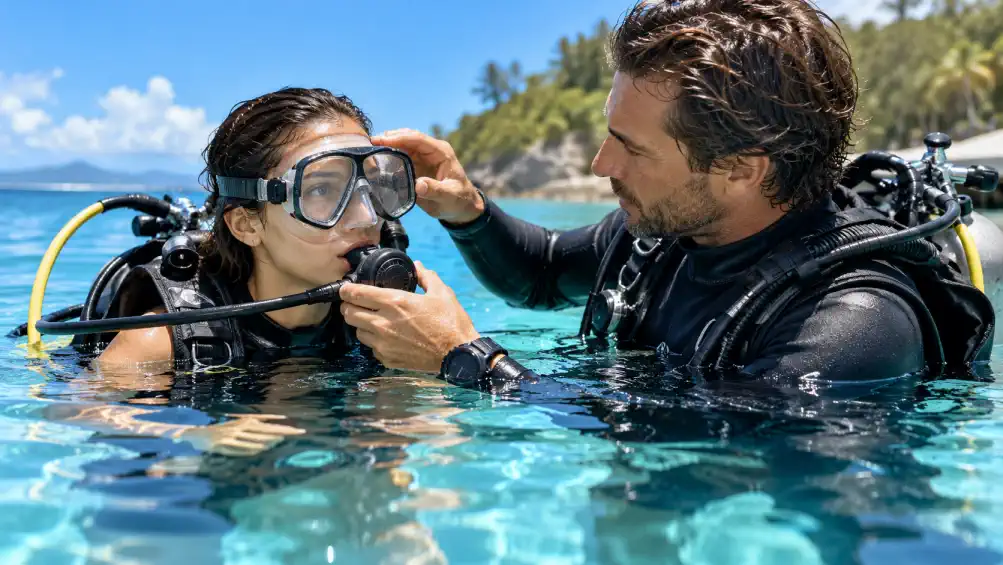
Your instructor will explain the mask, fins, regulator, cylinder, buoyancy control device and basic gauges. The equipment may look technical on land, but each piece has a clear job. You will learn how to breathe calmly through the regulator and how to communicate using familiar hand signals. You do not have to memorize an entire diving manual in one morning; focus on understanding the instructions and asking questions before entering the water.
Step three: practice in shallow, controlled conditions
Before any open-water exploration, you practice essential skills in a pool or pool-like shallow water, as required by the program being offered. These may include breathing steadily, clearing water from your mask, recovering or clearing your regulator and managing buoyancy with guidance. You are allowed to pause and repeat a skill. Feeling slightly awkward at first is common; the aim is gradual comfort, not speed or a perfect-looking performance.
Step four: your first underwater exploration
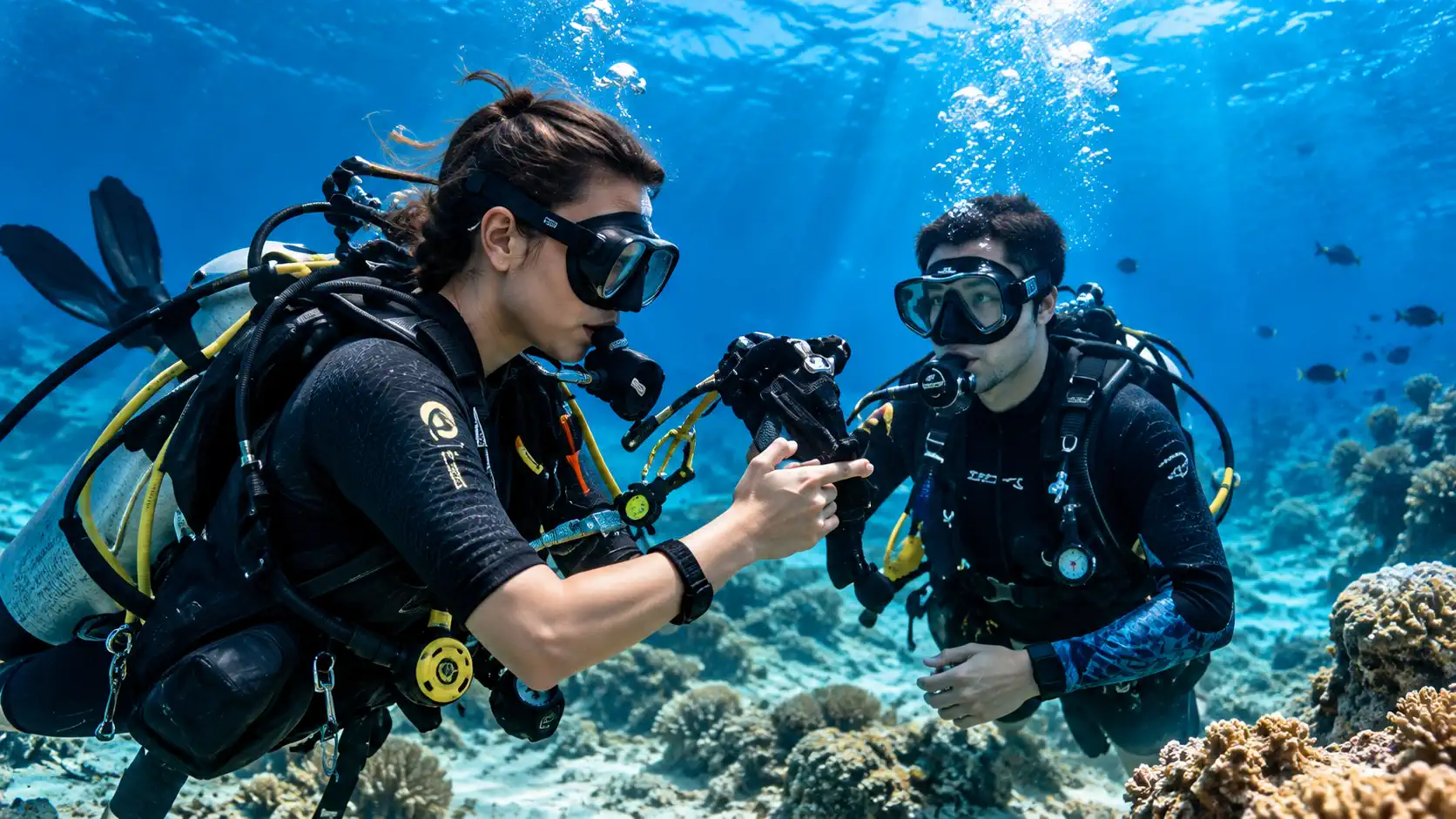
When the instructor determines you are ready and conditions are suitable, the most exciting part begins. Descending slowly, you may notice the sound of your breathing and the way light moves across the seabed. Keep close to your instructor, equalize your ears early and often, and avoid holding your breath. Move slowly, watch where your fins go and resist the urge to touch coral or small creatures. The entire experience should be guided by training limits and your comfort.
What could you see in Dauin?
Dauin’s underwater world rewards careful observation. Depending on the site and luck, divers may encounter reef fish, unusual bottom-dwelling creatures, nudibranchs or other tiny residents of the sand. First-time divers do not need to identify every species. The joy often lies in simply noticing a fish hovering in place or a small animal hidden near a rock. Treat sightings as a bonus rather than a promise, and leave everything exactly where you found it.
Simple tips for an enjoyable first lesson
Sleep well the night before, drink water and avoid arriving rushed. Bring swimwear, a towel, a change of clothes and any personal essentials your operator recommends. Avoid heavy drinking before diving and follow the instructor’s instructions about meals, hydration and flying after scuba. If your ears hurt during descent, stop and signal immediately; never force equalization. Most importantly, breathe continuously, communicate clearly and remember that you can stop the activity if you feel uncomfortable.
Try dive or Open Water course?
Choose a try dive when you want a supervised introduction without committing to a complete certification program. Choose an Open Water course when you want structured knowledge development, skill practice and qualifying dives toward a recognized entry-level certification. Course duration and prerequisites depend on the training agency, learning format and student progress. If you already know scuba is a long-term interest, ask Wet Spot Scuba which course pathway fits your holiday and future travel plans.
Frequently asked questions
- Do I need previous scuba experience? No, an introductory program is designed for eligible beginners.
- Do I need to be a strong swimmer? Requirements vary by activity; disclose your comfort honestly and confirm eligibility before booking.
- How deep will I go? Depth limits depend on the specific introductory program, age and conditions; ask your instructor.
- Can I dive if I am nervous? Tell your instructor first so the session can be paced appropriately.
Start your scuba journey with Wet Spot Scuba
A first scuba lesson in Dauin is about confidence, curiosity and responsible exploration, not ticking off a depth record. Wet Spot Scuba offers a local starting point for discussing try dives and further scuba training. Reach out with your preferred date, age, experience and any questions, and ask what the introductory session includes. Your first underwater breaths may begin a lifelong interest in the ocean.